Shingle roofing in Greenwood, AR
Compare shingle types, repair considerations and the details behind a new shingle roof in Greenwood. Start with the whole roof, then choose the product.
Free roof inspection. Start with the roof’s condition.
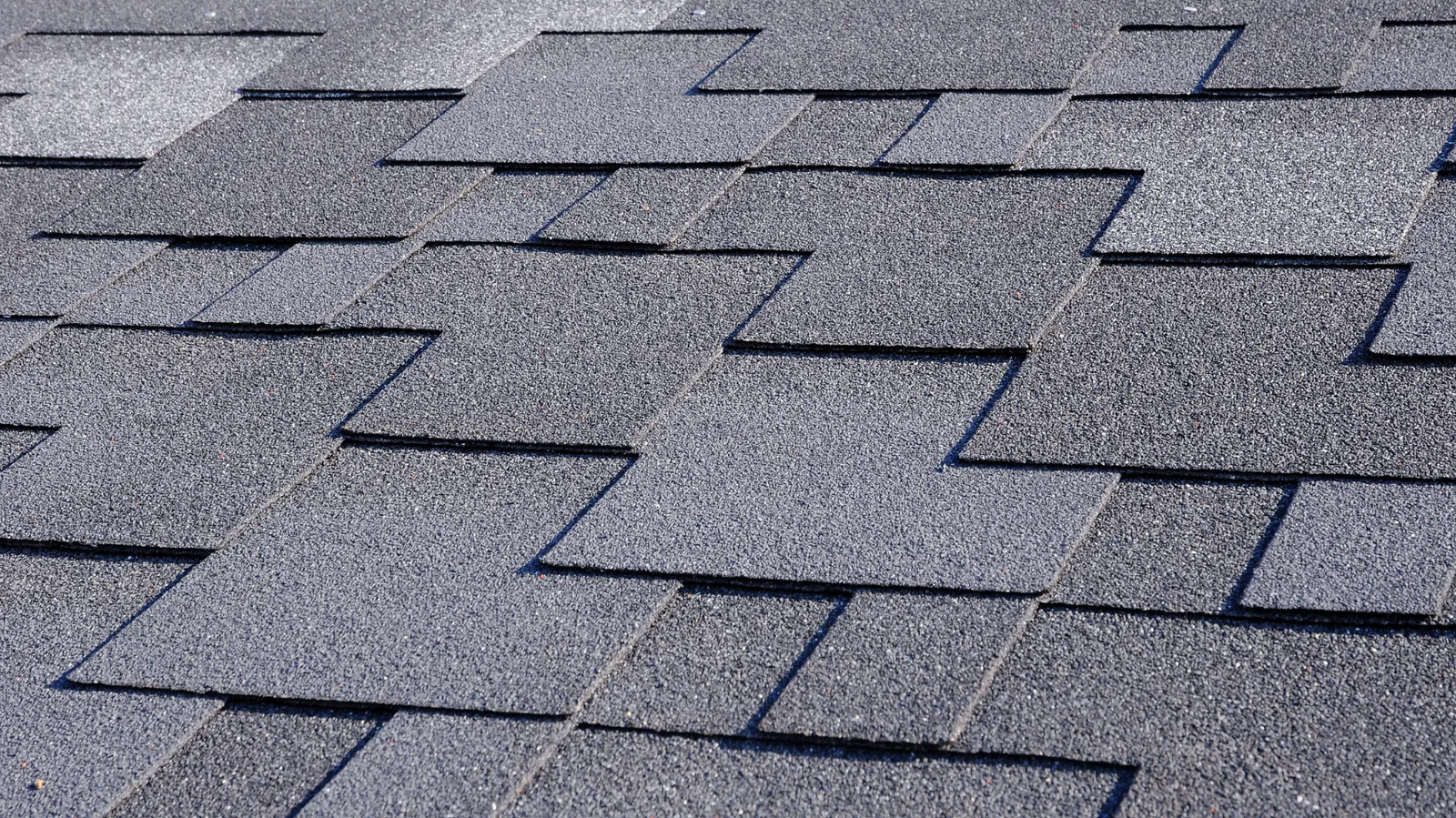
Choose shingles for the roof you are building
Shingles affect the appearance of the house, but they also belong to a roof assembly. The deck, underlayment, flashings, edges and ventilation support the finished covering. A material selection is more useful when those details are already part of the discussion.
For a Greenwood home, compare the profile you like with the actual product’s requirements and tested properties. A name such as architectural or impact-resistant does not describe every installation detail, warranty term or weather limit. Ask for the exact product, not only the category.
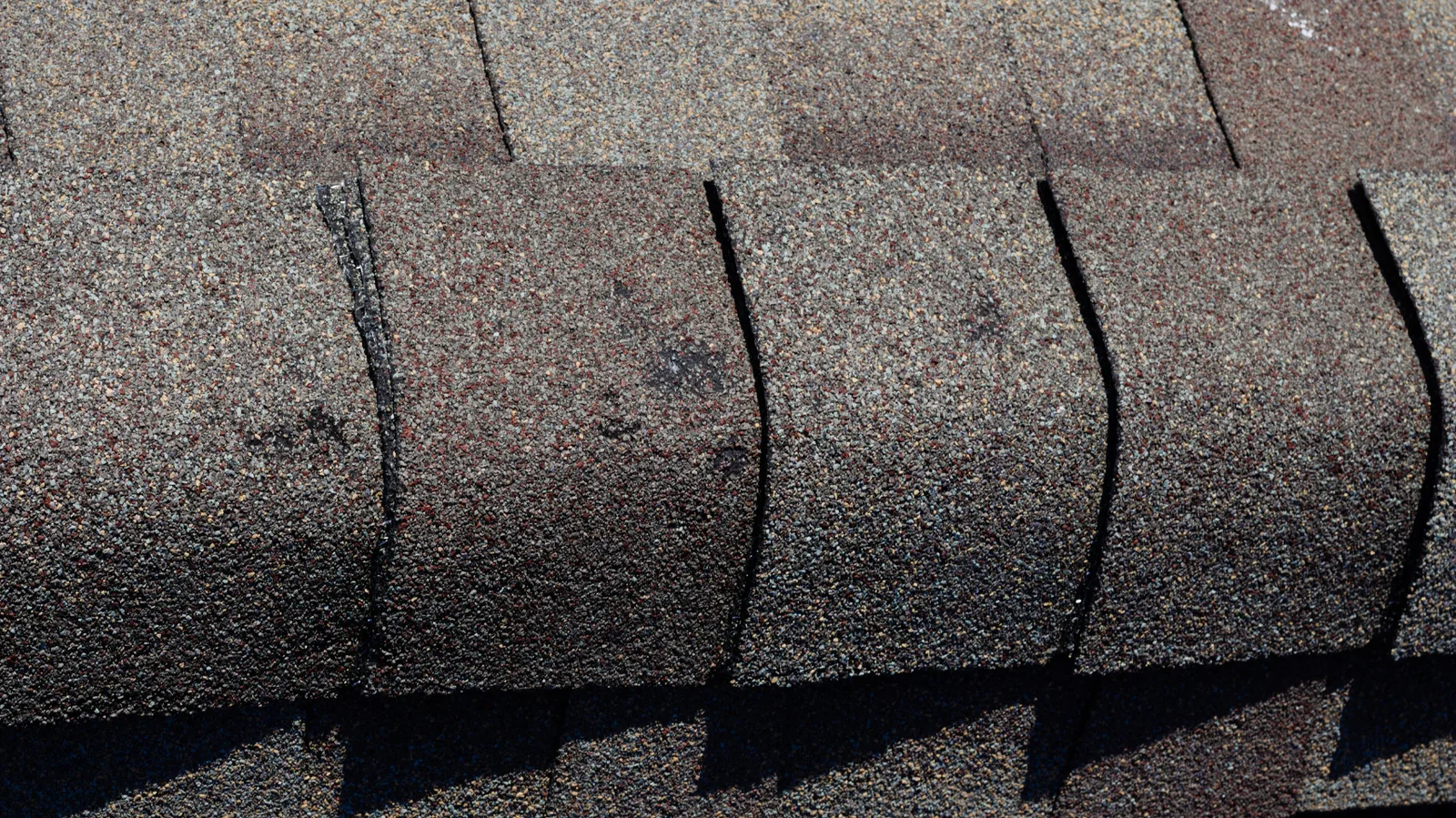
Compare shingle types for a Greenwood home
- Three-tab shingles
A regular tab pattern creates a relatively flat appearance. Match the particular product’s installation instructions and availability if you are repairing an existing roof.
- Architectural shingles
Laminated construction creates a more dimensional profile. Products vary in weight, appearance and published ratings, so compare the exact alternatives being proposed.
- Impact-resistant options
Impact resistance is a tested property, not a promise of an undamaged roof after every storm. IBHS testing helps compare relative hail performance among evaluated asphalt shingle products.
How an asphalt shingle roof keeps water out
A shingle roof is not sealed like a membrane. It works by overlap: each course covers the top of the one below, so water landing anywhere on the roof is always stepping down onto another shingle until it reaches the gutter. That is why the order things are installed in matters more than any sealant.
Each shingle is held by nails placed along a marked line, where they pass through two layers at once and are covered by the next course. A strip of adhesive on the back softens in the sun and bonds each shingle to the one under it. That bond is what resists wind. Shingles nailed too high, or that never sealed, are the ones that lift and crease in a storm.
Architectural shingles are two layers laminated together, which makes them heavier and harder for wind to lift than a single-layer three-tab. Impact-rated shingles use a tougher mat or a rubberized asphalt that is less likely to fracture under hail. None of that changes how the roof works. It changes how much punishment the top layer can take.
The details that help a shingle roof work
- A suitable base
Shingles need a sound, appropriate deck for fastening. Damaged or unsuitable sections should be addressed before covering them.
Decking with wide gaps between old boards, or sheets that have swollen at the edges, shows through the new shingles and can leave nails with nothing solid to hold.
- Water-shedding connections
Starter, ridge caps, valley details and flashings each serve a different part of the roof. The new covering must join these details in the correct sequence.
Starter goes on before the first course, valley lining before the shingles that cross it, step flashing with each course along a wall, and ridge caps last. Out of order, water ends up behind a piece instead of on top of it.
- Attachment and ventilation
Fastener placement and the manufacturer’s requirements matter. Attic ventilation needs suitable intake and exhaust paths; the shingle choice does not solve a blocked air path.
Nails driven at an angle, too deep or above the nail line hold one layer instead of two, and the shingle gives up much of its wind resistance.
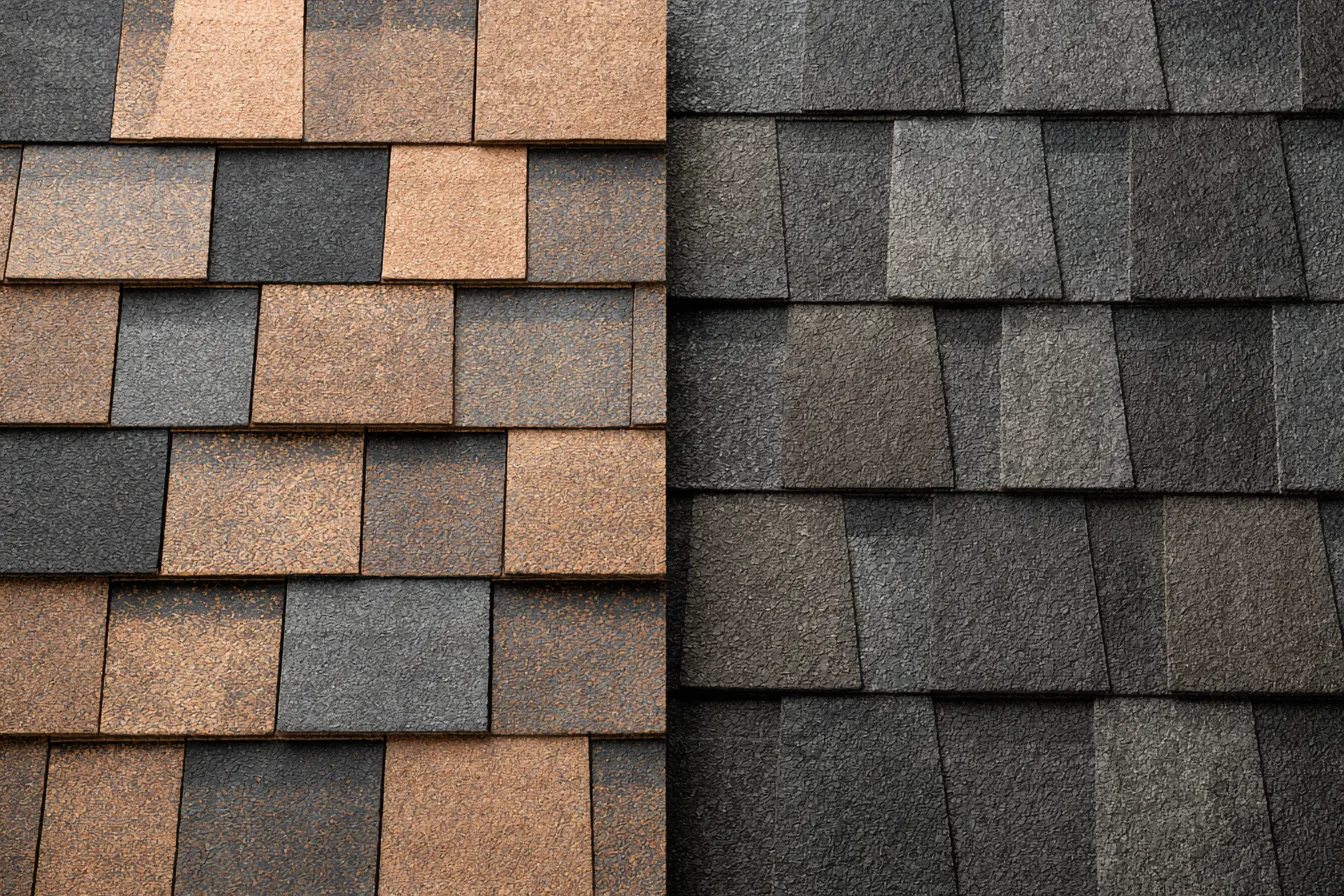
Shingle roof repair and matching
A small shingle repair needs material that works with the existing roof. The replacement piece must fit beneath neighboring courses without breaking them, and the surrounding covering must still be usable. Color and weathering can make even a compatible product look different.
Manufacturers change colors and discontinue lines, so an exact match for an older roof is not always available. New shingles also look cleaner than weathered ones for the first few seasons, then the difference softens.
If matching is difficult, discuss both the visible result and the repair boundary. Expanding work only for color is a different decision from expanding it because brittle or damaged material cannot support the repair.
Shingle roofing FAQs
Are architectural shingles always impact-resistant?
No. Architectural describes a dimensional construction and appearance. Check the exact product’s impact rating and test information separately.
Does an impact rating guarantee insurance savings?
No. Any discount depends on the insurer, policy and its documentation requirements. Confirm eligibility with the insurer before making that assumption part of the purchase.
How should I choose a shingle color?
Look at samples alongside the house materials and in daylight. Ask how the installed blend will appear across the roof; a small sample and a large roof surface can read differently.
What warranty comes with a new shingle roof?
Ask for the actual product warranty and any separate workmanship terms for the proposed work. Coverage, exclusions and eligibility depend on those documents, not simply the word “lifetime” in a product name.
Talk through your shingle roof options
A free inspection can help connect your shingle choices with the roof and project you have.
Call (479) 252-9404