Roof repair in Greenwood, AR
The stain on the ceiling tells you water got inside. A roof inspection helps find where it entered and what needs to change to keep rain out.
Free roof inspection. Start with the roof’s condition.
Greenwood roof repair starts at the water’s entry point
Rain can move along roof decking or framing before it reaches a ceiling. That is why repairing only the roof directly above a stain can miss the opening. The inspection follows the roofing details that feed that area: uphill shingles, roof-to-wall joints, vents and other interruptions in the surface.
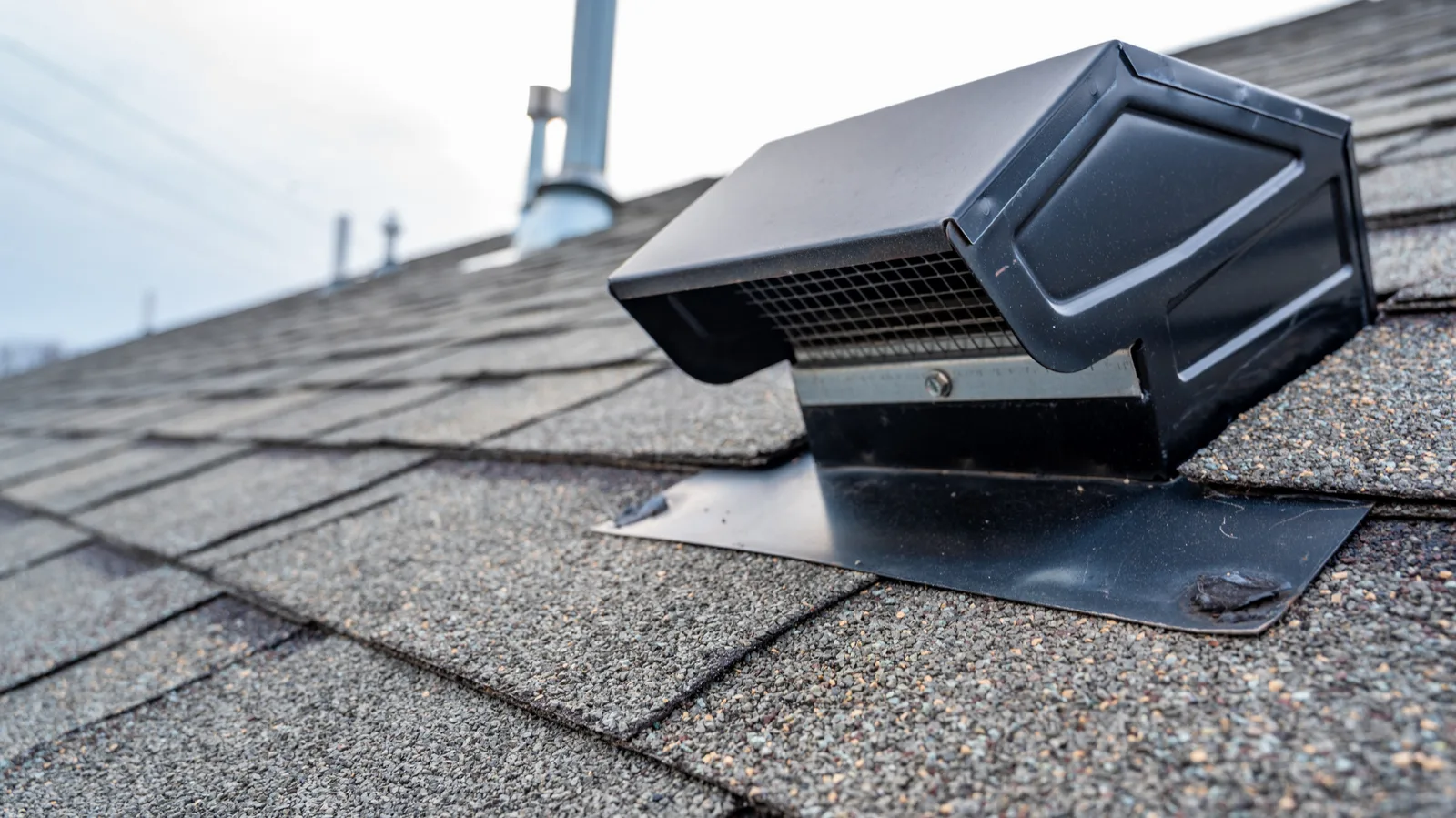
A vent flange, for example, relies on the shingle courses above it to shed water onto its metal base. An opening at that overlap gives water a route underneath. The right repair restores that drainage relationship, rather than relying on a broad smear of sealant across the surface.
What a Greenwood roof repair needs to address
A roof repair is work on one of these parts. Each needs something different, and each decides how much roofing has to be opened to reach it.
- Shingles and fastening
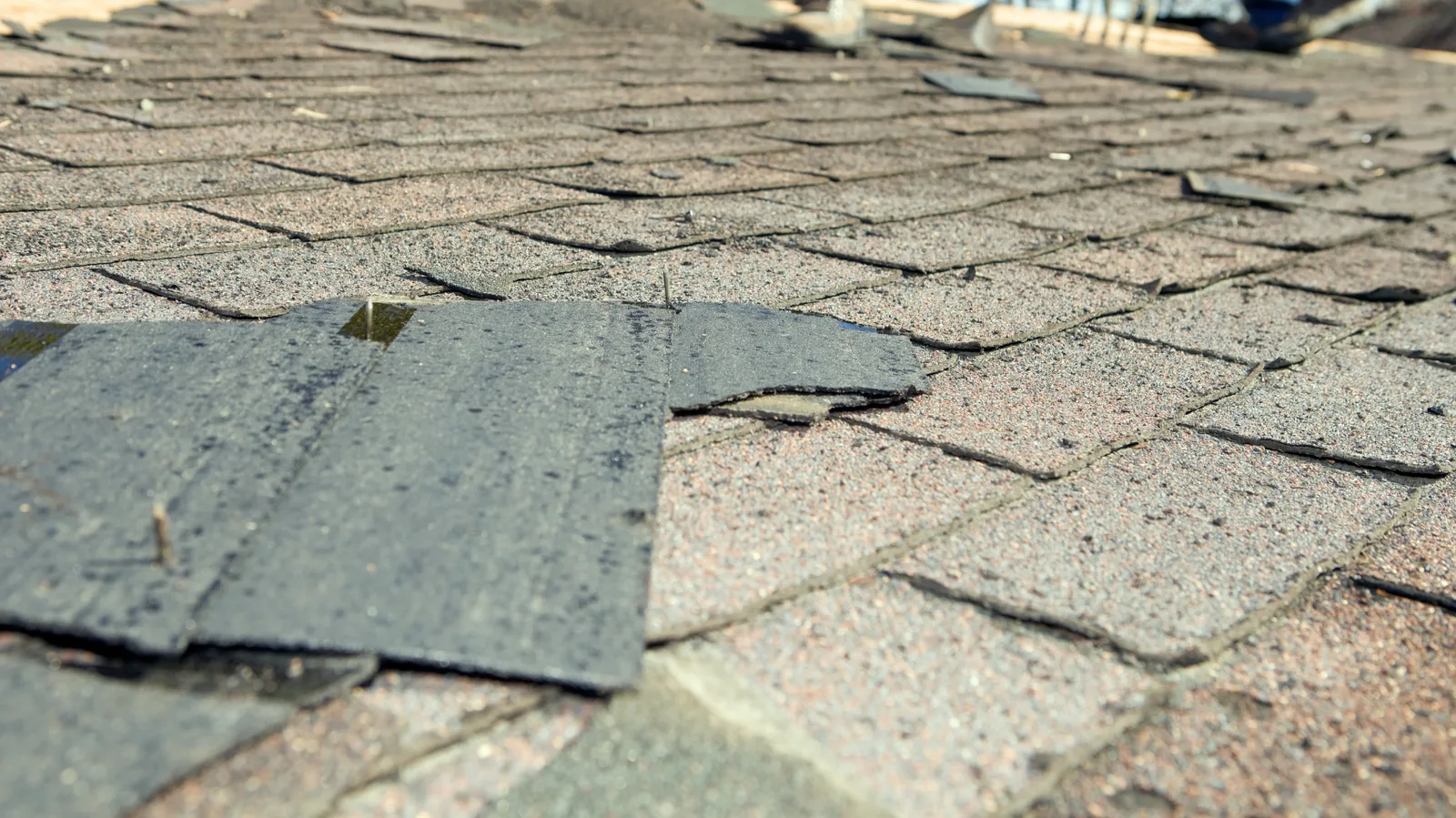
Missing or torn shingles leave the layer below exposed. Replacing them requires usable neighboring shingles so the new piece can be fitted and fastened without breaking the surrounding covering.
Wind takes shingles where the adhesive strip has let go, so the roofer also presses on the courses around the gap. Loose neighbors get resealed or replaced along with the missing ones, because they are the next to go.
- Pipe boots and roof vents
Every plumbing pipe leaves the roof through a boot: a metal or plastic base with a rubber collar around the pipe. Sun hardens that collar until it splits, and rain then follows the pipe straight into the attic. Replacing a boot means lifting the shingles above and beside it, setting the new base under the upper courses and over the lower ones, and sealing the fasteners.
- Flashing at walls and chimneys
Flashing is shaped material that keeps water moving past joints. Loose edges, open seams and failed seals need attention to the path water takes, including the material above the repair.
Where a roof meets a wall, individual step flashings are woven into each shingle course and tucked behind the siding. When a section fails, the shingles along that stretch come up so new metal can be layered in properly. A chimney adds a second piece, set into the brick, that covers the top edge of the first.
- Valleys
A valley carries the runoff from two slopes, so it handles more water than any other part of the roof. Debris, worn shingles or a cracked valley lining let that water get underneath. A valley repair opens the shingles on both sides, renews the lining and re-lays the courses so they lap over it.
- Wet or weakened roof decking
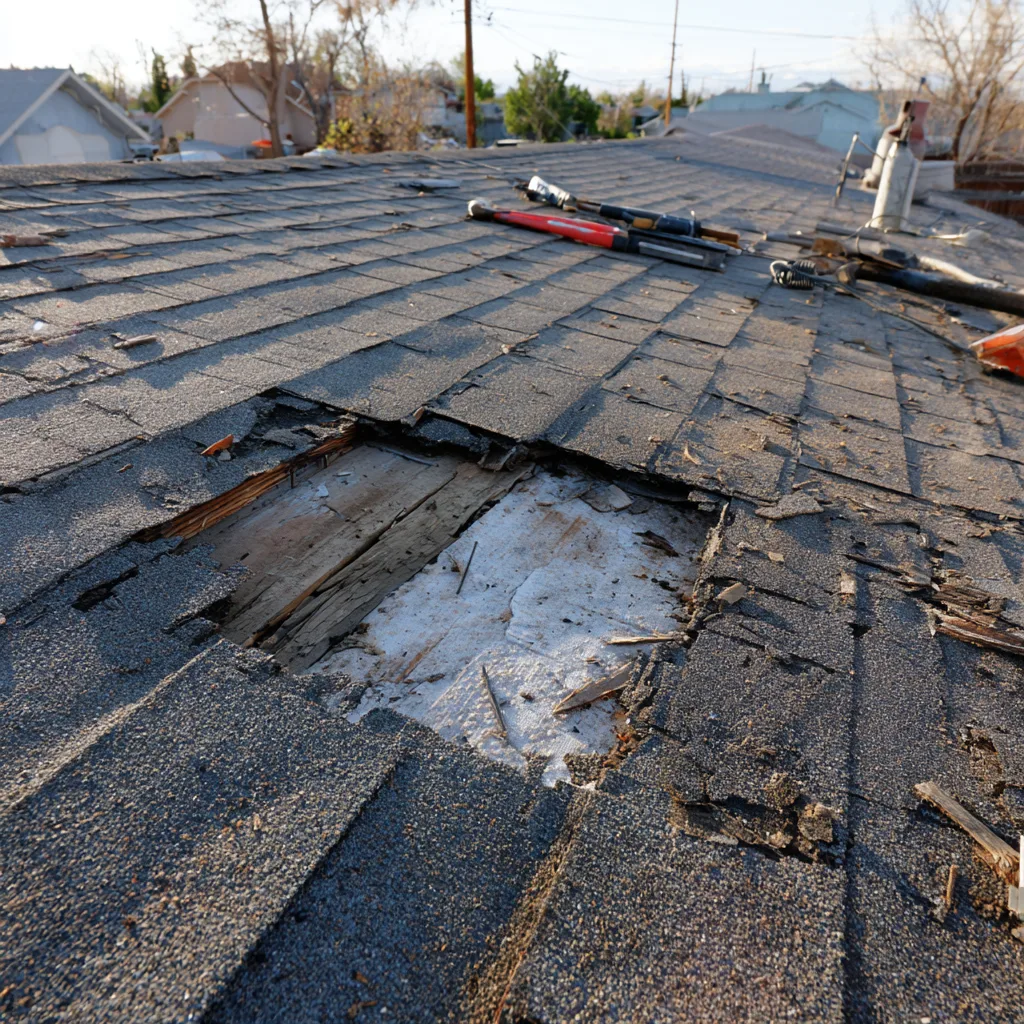
If water has damaged the wood that supports the covering, surface work alone is not enough. The affected area must be assessed so new roofing has a sound base.
Soft or delaminated sheathing is cut back to the nearest rafters and replaced, then underlayment and shingles go back over a solid surface. Shingles nailed into rotten wood will not stay put.
How a roof repair is carried out on a Greenwood home
The visible damage sets the starting point. What the roofer finds as the roofing comes up decides where the repair ends.
Trace the water to where it gets in
The roofer works uphill from the stain or the damaged spot, checking the details that drain toward it. If the leak only shows in wind-driven rain, or only after hours of steady rain, say so. It narrows the search.
Check what the repair has to tie into
Before anything is removed, the surrounding shingles are lifted gently to see whether they still flex. Flexible shingles can be opened and re-laid. Brittle ones crack when they are bent, and that pushes the repair outward to material that can take it.
Open the roof back to sound material
The damaged covering comes off along with enough of its neighbors to expose the whole problem: the failed flashing, the torn underlayment, the stained wood. This is the point where the true size of the repair shows.
Fix the wood, then rebuild in order
Any soft decking is replaced first. Then underlayment, flashing and shingles go back from the bottom up, each piece lapping over the one below it so water always lands on top of the next layer. Exposed fasteners are sealed and the area is cleaned up.
When a repair grows into a larger roofing decision
A small visible patch does not set the size of the job. What happens when the roofer reaches sound material does.
- Repair stays local
The adjacent shingles lift without cracking, the decking is sound and the opening is contained. The repair can tie into the existing roof.
A split boot, a short run of lifted shingles or one failed flashing on an otherwise sound roof ends here.
- Repair reaches farther
Deterioration continues beyond the first damaged piece or beneath the surface. The work expands until it can connect to sound roofing.
A leak that ran for a season before anyone noticed can leave more soft wood than the stain suggests, and the repair follows it.
- Replacement enters the comparison
Repeated failures or widespread brittleness make isolated repairs less useful. Compare what a broader repair would leave behind with what replacement would resolve.
No leak count or percentage makes this decision. It is a judgment about how much sound roof the next repair would have to tie into, and it is fair to price both.
What affects roof repair cost in Greenwood?
Access, roof height and slope affect the work needed to reach a repair safely. The material, the kind of flashing and the amount of roofing that must be opened affect the scope. Decking repairs add another part of the job when deterioration is found beneath the covering.
An inspection is more useful than a flat per-leak price because two similar ceiling stains can come from very different repairs. The important comparison is the failed detail, how it will be rebuilt and whether nearby damage is included.
A small repair: one pipe boot on sound shingles
The roofer lifts a few courses around the pipe, swaps the boot and re-lays the same shingles. The material cost is low and little of the roof is disturbed. Most of the price is getting safely onto the roof with the right parts.
A larger repair: new flashing along a wall
The shingles come up for the full length of the wall, and the siding or trim above may have to be loosened to get new metal behind it. If the leak has been running a while, some decking is replaced too. More of the roof comes apart, more goes back, and the price follows.
- Reach and pitch
A low, walkable slope over a garage is simple to work on. A steep second-story section above a porch needs more setup and more time for the same repair.
- Matching material
Repairs use shingles compatible with what is on the roof. An older or discontinued product limits the options, and new shingles beside weathered ones will show for a while.
- Wood under the covering
Decking repairs add material and labor that nobody can count from the surface. They are priced by what is actually found.
Roof repair FAQs
Can a Greenwood roof leak be repaired in one spot?
Yes, when the entry point is localized and the surrounding roof can accept the repair. Several stains do not necessarily mean several openings, just as one stain does not prove the rest of the roof is sound.
Should I put sealant over a loose shingle?
Avoid climbing onto the roof or spreading sealant across shingle courses. It can interfere with drainage and hide the detail that needs repair. Tell us what you can see safely from the ground.
What if the roof only leaks during windy rain?
That detail is useful. Wind-driven rain can reach an opening that an ordinary shower misses, especially around walls and penetrations. Mention when the leak appears so the inspection can consider that water path.
What should I do while water is coming inside?
Keep people away from wet electrical fixtures and a bulging or sagging ceiling. Catch drips only where it is safe, move belongings out of the affected area and arrange roofing help. An active leak should not wait for the next planning cycle.
How do I know whether replacement is worth discussing?
If repairs keep recurring or the covering around a repair breaks apart, a broader comparison is useful. The repair-or-replace guide explains what those findings change; age alone does not settle the answer.
Get the roof problem checked in Greenwood
Describe the stain, damaged area or recurring leak. A free inspection gives a roofer a closer look at the roof and the work needed.
Call (479) 252-9404