Flat roofing in Greenwood, AR
Get help with low-slope roof leaks, drainage and replacement planning in Greenwood. The roof surface and the route water takes both belong in the scope.
Free roof inspection. Start with the roof’s condition.
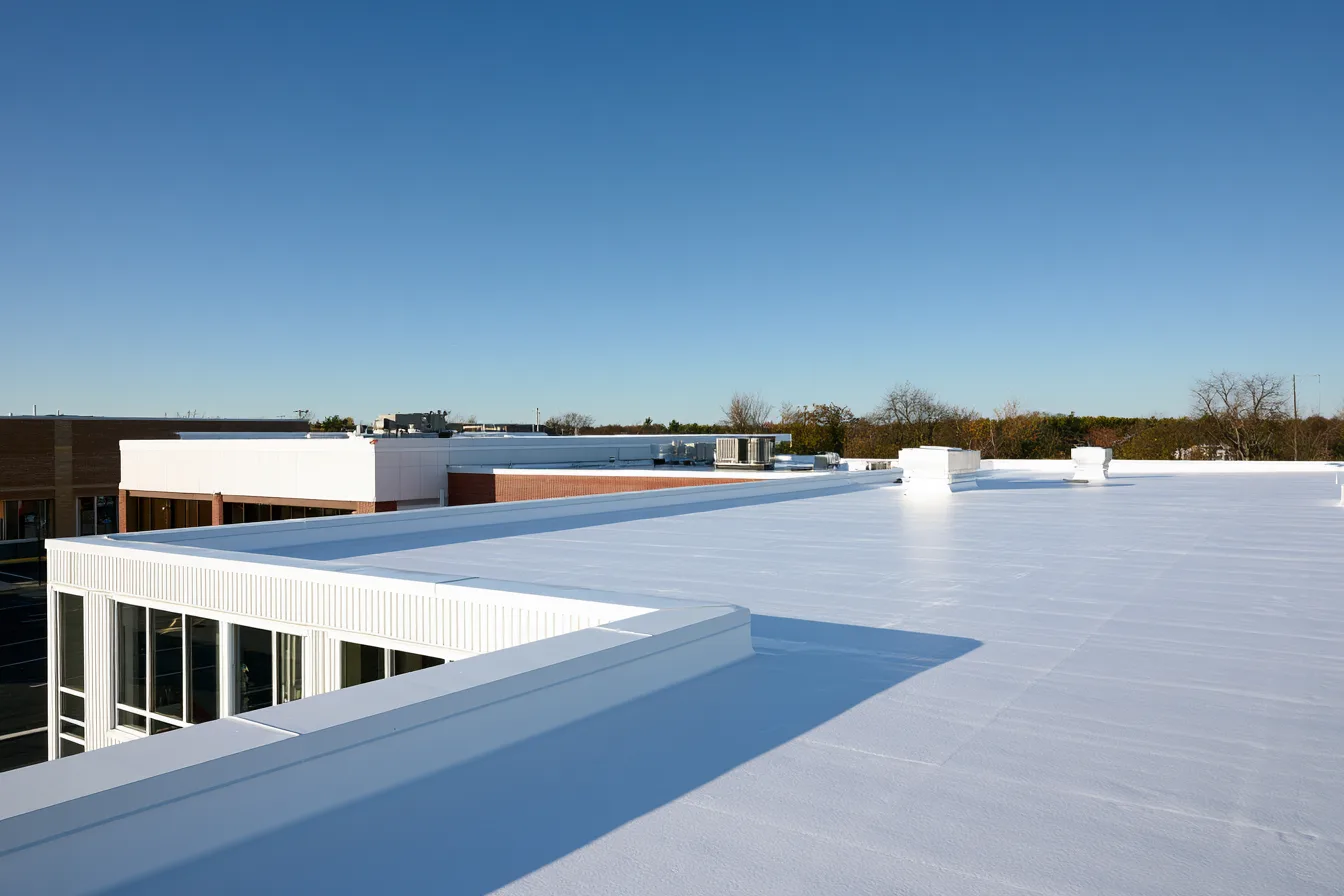
Low-slope roof repair in Greenwood
A flat roof still needs to move rain toward an outlet. Low areas, blocked drains and interrupted paths can leave water sitting against seams or flashings. Repairing a leak without understanding that water path can leave the roof exposed to the same problem.
For a Greenwood building, inspect the membrane or roof covering together with drains, scuppers, perimeter edges and rooftop equipment. Note where the interior leak appears and whether it follows ordinary rain or only a heavier storm. The condition below the surface also matters when choosing what can remain.
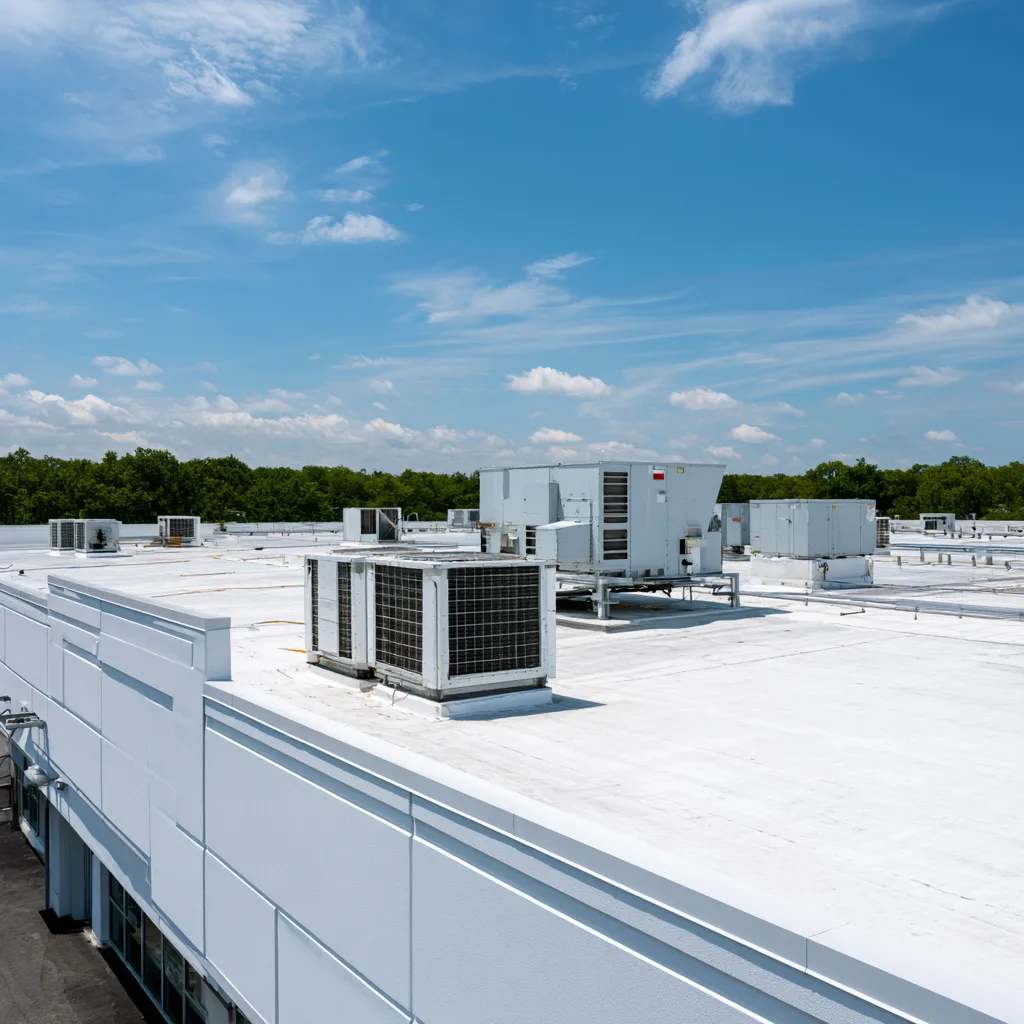
Follow water from the roof to the outlet
Drainage depends on the route across the surface and the connection at the outlet. An open drain does not resolve a low area elsewhere on the roof.
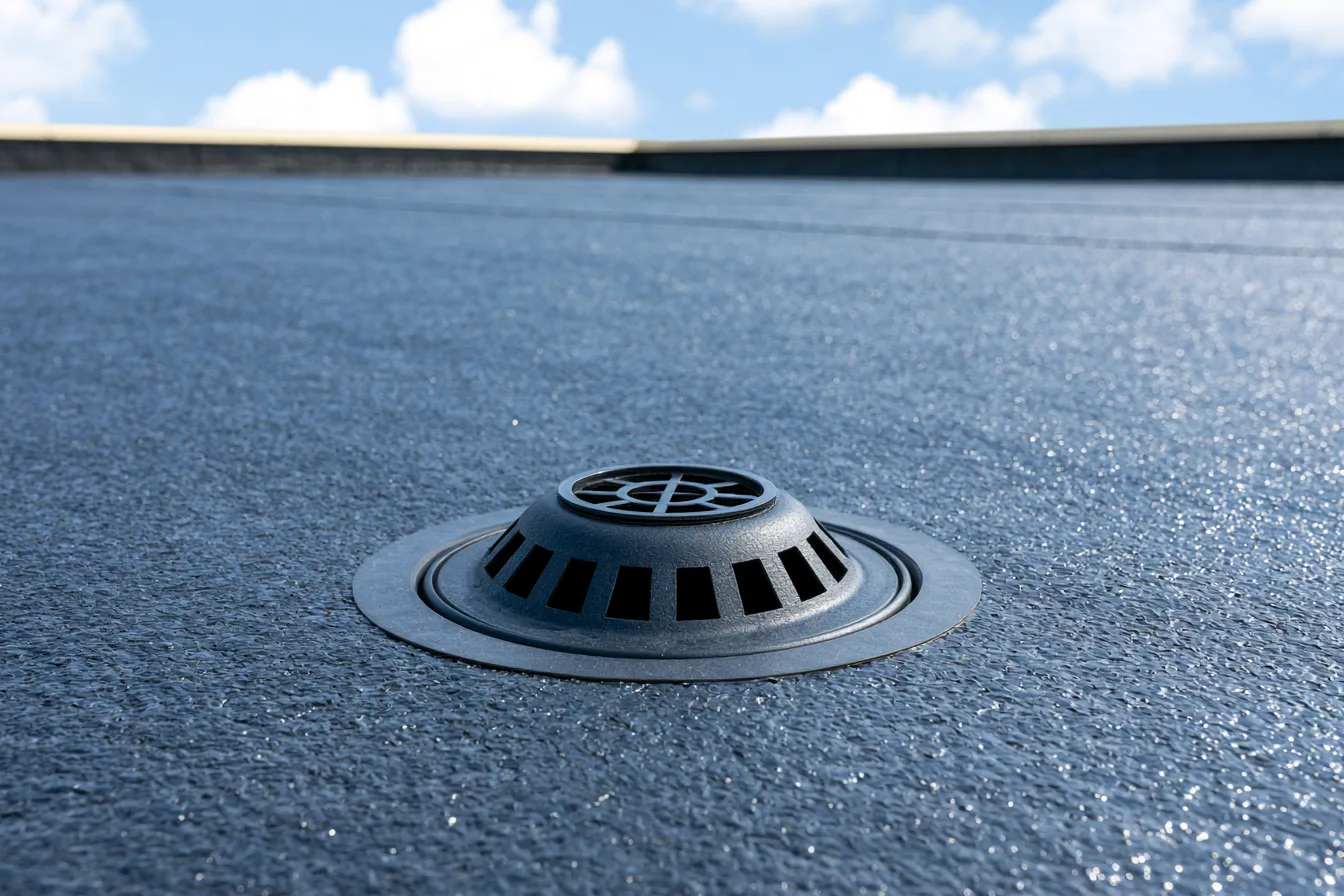
- Roof drains
A drain needs a clear opening and a sound connection to the roofing. Debris around it, damaged flashings or a drain set above a nearby low area can affect performance.
- Scuppers and perimeter drainage
Scuppers pass through parapet walls; some roofs drain over an edge into gutters. Their openings, transitions and downstream paths need to remain usable.
- Slope and low areas
The deck and insulation layout shape the route water takes. A low area can require a change in that geometry, rather than another coating over the same contour.
- Rooftop equipment
Curbs and penetrations can interrupt drainage and concentrate detail work. A roof plan should account for how water gets around them and how service technicians reach the units.
How a flat roof leak is traced and repaired in Greenwood
On a low slope the drip and the opening can be a long way apart, so the work starts inside and moves outward.
Start under the leak
The wet ceiling tile gives a starting point, not an answer. The roofer notes where it sits relative to walls, drains and rooftop units, and whether it shows in every rain or only in heavy or wind-driven storms.
Work outward on the roof
Water can enter well uphill of where it drips. The search covers the seams, flashings, penetrations and drains that feed that area, plus any recent work by other trades, since a dropped panel or a dragged hose can cut a membrane.
Check what is under the surface
A soft or compressible area is a reason to investigate the assembly. Moisture is one possible cause, but the surface feel alone does not establish it or its duration. Confirmed wet or unsuitable layers need appropriate removal or repair before a new patch closes the area.
Repair with compatible materials
Identify the covering and use a repair approved for that system, whether it involves a compatible sheet, welding, adhesive or another specified detail. An unsuitable surface product can interfere with later work. Existing patches and coatings need checking before choosing the method.
Repair the detail or renew the roof assembly
- A localized detail repair
A seam, curb flashing or small damaged area may be repairable if it can connect to sound, compatible material. The repair should account for any moisture beneath that opening.
- Broader roof renewal
Widespread failure, wet layers or an unsuitable base may make replacement more useful. Define removal, retained layers, insulation and drainage changes together.
- Restoration on a suitable roof
Coatings can be considered when the existing assembly is suitable and the surface can be properly prepared. They do not correct a weak deck or make wet insulation dry.
What changes flat roof repair cost in Greenwood
The opening, layers beneath it and surrounding connections determine the repair. Membrane is one cost alongside investigation, access, removal and rebuilding.
A seam or flashing repair on a dry roof
On a confirmed dry, suitable base, work may stay at the failed seam or flashing. Cleaning, a compatible repair and checks of adjacent details form the scope. Access and the actual method determine the time and cost.
A leak that has soaked the insulation
The membrane is cut back, wet insulation is removed down to the deck, the deck is checked and repaired if needed, and new insulation and membrane are built back up and tied in on all sides. It is a small re-roof, and it is priced like one.
- Drainage corrections
An outlet correction or tapered insulation can address a demonstrated drainage problem. Deck movement, plumbing and structural capacity may also need attention. The solution must follow the cause; a surface change alone does not guarantee that leaks will not recur.
- Rooftop equipment
Working around units, or lifting one to rebuild its curb flashing, brings in a mechanical contractor and a schedule.
- Access and the space below
Material has to reach the roof, and some interiors need protection or off-hours work. Both affect labor.
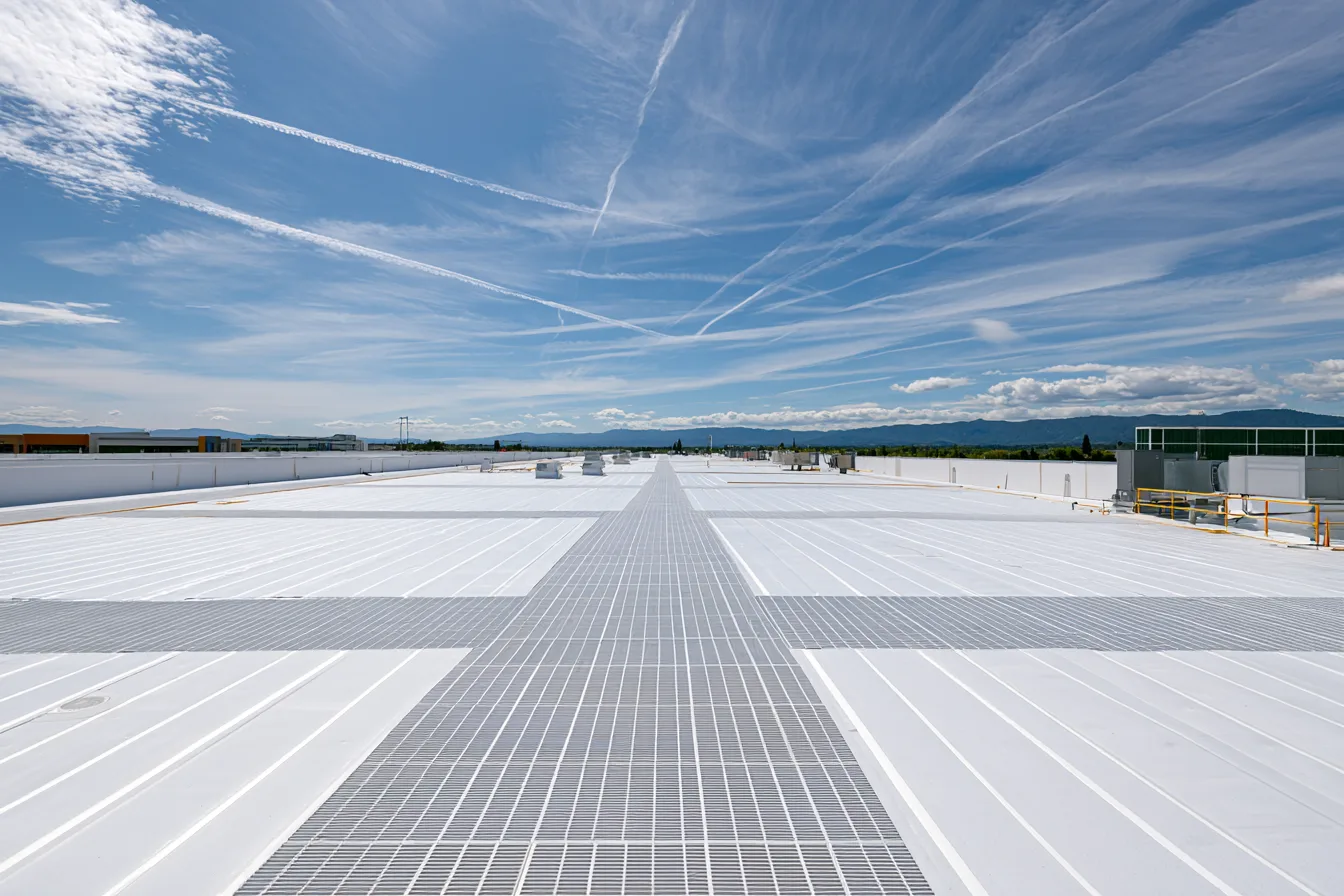
Keep roof access and maintenance in the plan
A commercial roof is often a route to mechanical equipment as well as a weather barrier. Walkways, access points and work by other trades should be considered so future service does not damage the roof details. Keep roof records and the location of previous repairs where the building team can find them.
When discussing work, identify loading areas, entrances and sensitive occupied spaces below. Ask how the work will be sequenced and what protection is included. A sound roof scope needs to fit the way the building is used.
Flat roofing FAQs
Is every flat roof a TPO roof?
No. Flat describes the roof shape; the covering may be one of several systems. TPO roofing has its own membrane and seam requirements. Identify the existing roof before choosing compatible work.
Should I clear a blocked drain myself?
Only use roof access under the building’s safe access procedures and with appropriate personnel. Mention the suspected blockage when requesting help. Water, edges and concealed roof damage can make walking unsafe.
Does standing water always mean replacement?
No. A localized obstruction or detail may be the cause. The inspection should establish whether the issue is the outlet, roof shape, surface condition or a combination of those factors.
Can a new membrane solve a drainage problem?
Only if the scope addresses the cause. Putting new material over the same low area can retain the same water path. Ask whether deck, insulation or outlet changes are included.
Start with your Greenwood commercial roof
Tell us where the low-slope roof is leaking and what you have noticed about drainage. A free inspection starts the discussion.
Call (479) 252-9404