Commercial roof coatings in Greenwood, AR
Find out whether a roof coating belongs in the plan for your Greenwood building. Restoration starts with the condition of the roof that would stay underneath.
Free roof inspection. Start with the roof’s condition.
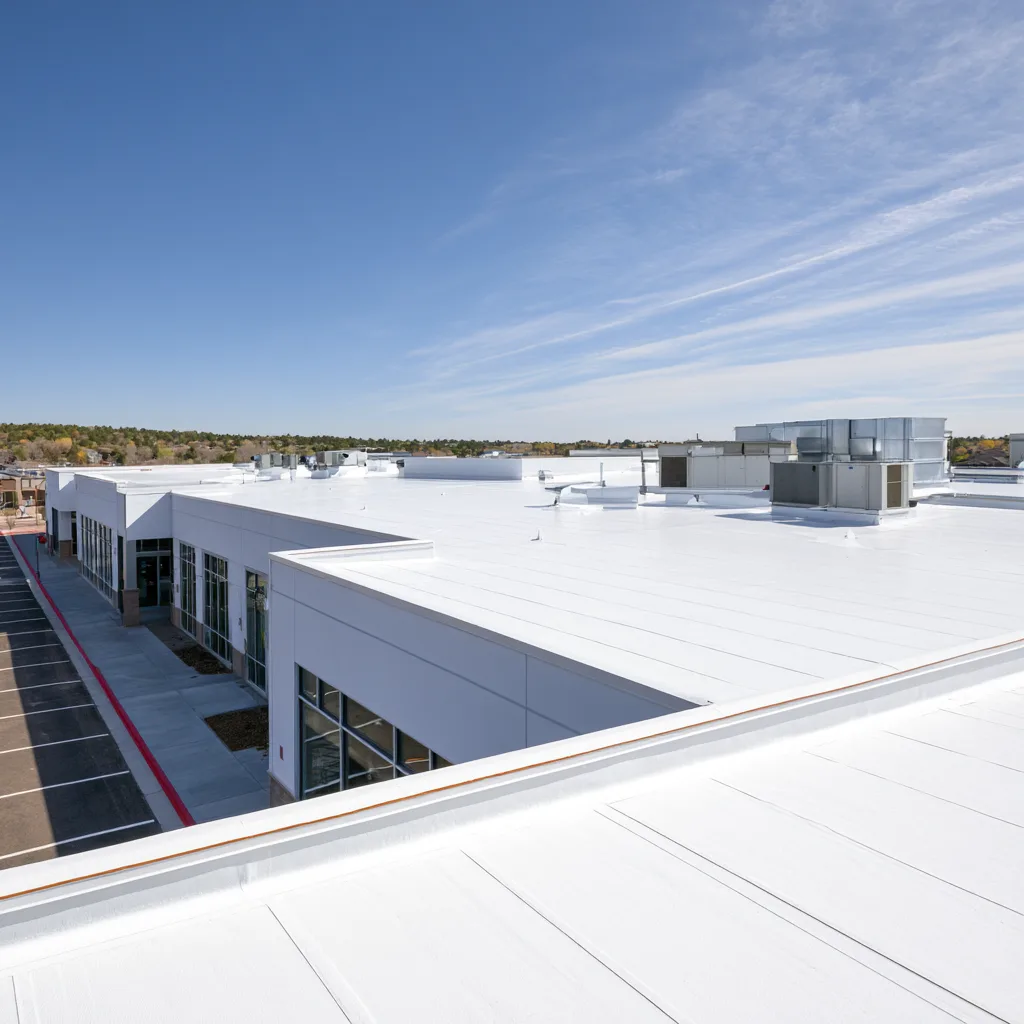
Commercial roof restoration in Greenwood
A roof coating is applied over an existing surface as part of a compatible restoration system. Its value depends on the roof being worth retaining: the base must be suitable, underlying moisture addressed and the surface able to hold the coating. A new-looking finish cannot resolve a weak deck or trapped wet insulation.
For a Greenwood commercial roof, begin with the leaks, repair history and existing material. Identify earlier coatings or patches before selecting a system. The inspection should separate what can stay from what needs repair or removal before coating begins.
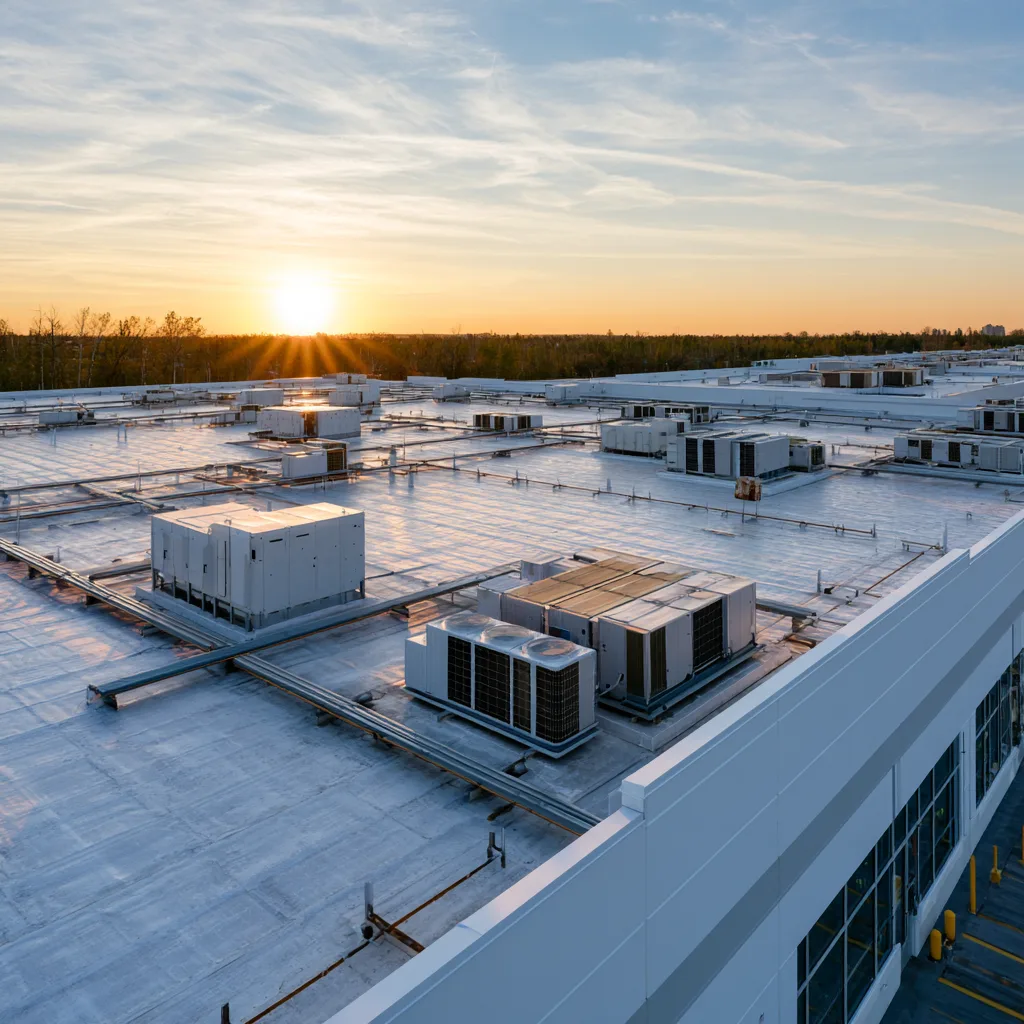
Check the roof before choosing a coating
- Moisture beneath the surface
Determine whether water has entered insulation or other layers. A dry-looking top surface does not prove the assembly below is dry; further investigation may be needed to define the affected areas.
- Adhesion and compatibility
The proposed coating must bond to the prepared substrate. Existing coatings, contamination and surface condition affect that bond. Manufacturer-specific preparation and adhesion testing help establish suitability.
- Drainage and structural condition
Outlet problems, low areas and unsound supports require their own solutions. Product suitability for exposure to ponding does not remove the need to evaluate why water is remaining on the roof.
What a coating project includes
The coating is the last step. What happens before it decides whether it lasts.
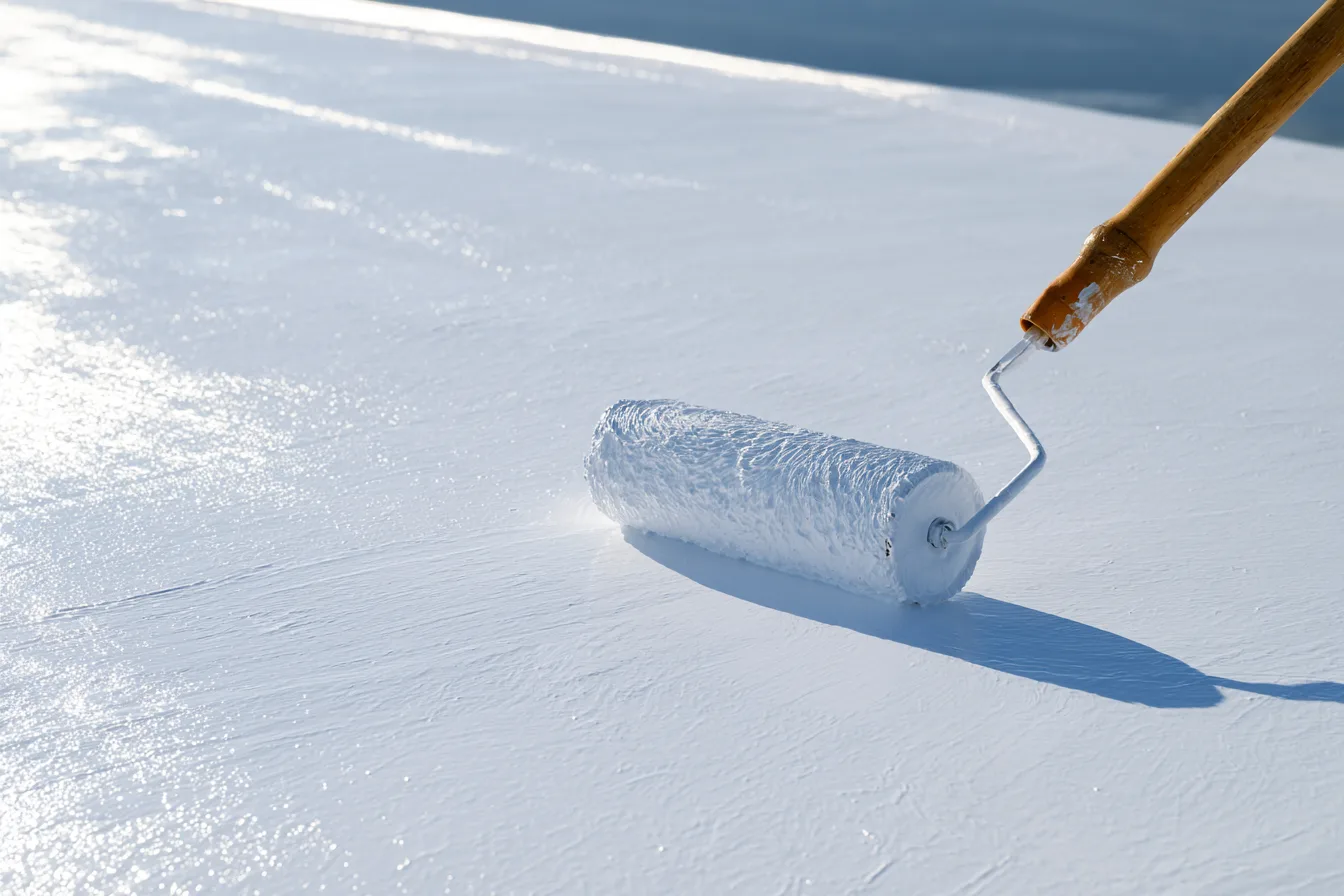
Repair before application
Open seams, damaged flashings and other defects need the repair details required by the chosen system. A broad finish coat is not a substitute for rebuilding a failed connection.
Wet insulation found during the roof survey is cut out and replaced at this stage.
Clean and prepare the surface
Dirt, loose material and moisture can prevent a sound bond. Primer requirements vary with the substrate and coating; they belong in the specified system.
The roof is typically pressure washed and left to dry fully, and an adhesion test patch confirms the coating will bond to this particular surface.
Apply the specified system
Required coverage, cured thickness and treatment at seams or penetrations need to be defined. Weather and curing conditions affect when the work can be carried out.
Seams, flashings and fasteners get a reinforced base treatment first, then the field is coated to the specified thickness.
Set expectations for continued care
Roof access, future mechanical work and maintenance must respect the coated surface. Obtain the actual maintenance instructions and warranty documents for the proposed project.
Acrylic, silicone and urethane roof coatings compared
The chemistry matters because each type has a weakness, and the roof decides which weakness you can live with.
- Acrylic
Water-based, reflective and economical. Acrylics do well on roofs that drain and poorly where water stands, because prolonged ponding softens them. They need mild, dry weather to cure.
- Silicone
Holds up under standing water and strong sun better than acrylic. It picks up dirt over time, is slippery when wet and very little will stick to it later, including other coatings. Choosing silicone is also choosing what any future recoat has to be.
- Urethane
Tougher against foot traffic and impact, so it is used around equipment and walk paths or as a base coat under another product. It costs more and has a stronger odor during application, which matters on an occupied building.
Coating cost depends on preparation
Two coating prices can hide very different preparation scopes. Compare cleaning, repairs, wet-material removal, primer, detail treatment and the specified coating coverage before comparing the totals. A proposal that assumes the roof is already suitable leaves a significant question unanswered.
Restoration may retain useful material, but the savings and service life depend on the actual system and condition. Discuss those project terms directly. If too much of the assembly is unsuitable, compare the complete restoration scope with replacement.
A roof that is ready for coating
Dry insulation, sound seams and good drainage. The work is cleaning, treating seams and fasteners, and applying the coating. Most of the money goes into the product on the roof, which is the situation coatings are meant for.
A roof that needs work first
Wet areas to cut out and rebuild, flashings to replace, ponding to correct and an old coating to test or remove. The preparation can cost as much as the coating. At some point the fair comparison is with a new roof, and the two numbers belong side by side.
Roof coating FAQs
Can a coating stop an active leak?
A restoration project can address leaks when the failed details are repaired and the roof is suitable for the coating system. Applying coating over unresolved defects or wet layers is not the same scope.
Can wet insulation stay below a coating?
Wet or damaged material needs investigation and an appropriate repair or removal plan. A coating does not dry or restore the insulation beneath it.
Are silicone and acrylic coatings interchangeable?
No. Products differ in substrate compatibility, preparation, exposure requirements and application conditions. The choice should follow the actual roof and manufacturer’s system requirements.
Does coating create a new roof warranty?
Ask for the specific warranty offered with the proposed work, including eligibility, coverage and exclusions. A product name or a general claim about coatings does not establish the terms for your building.
What if the roof cannot be retained?
Then compare removal and replacement with the full restoration scope. The commercial roofing overview explains how retained layers and building operations affect that decision.
Find out whether restoration fits your roof
Request a free inspection to discuss the existing roof and whether repair, restoration or replacement deserves a closer comparison.
Call (479) 252-9404