Commercial roofing in Greenwood, AR
A commercial roof decision reaches beyond the surface. Understand what can be repaired or retained, how water drains and what the work means for your building.
Free roof inspection. Start with the roof’s condition.
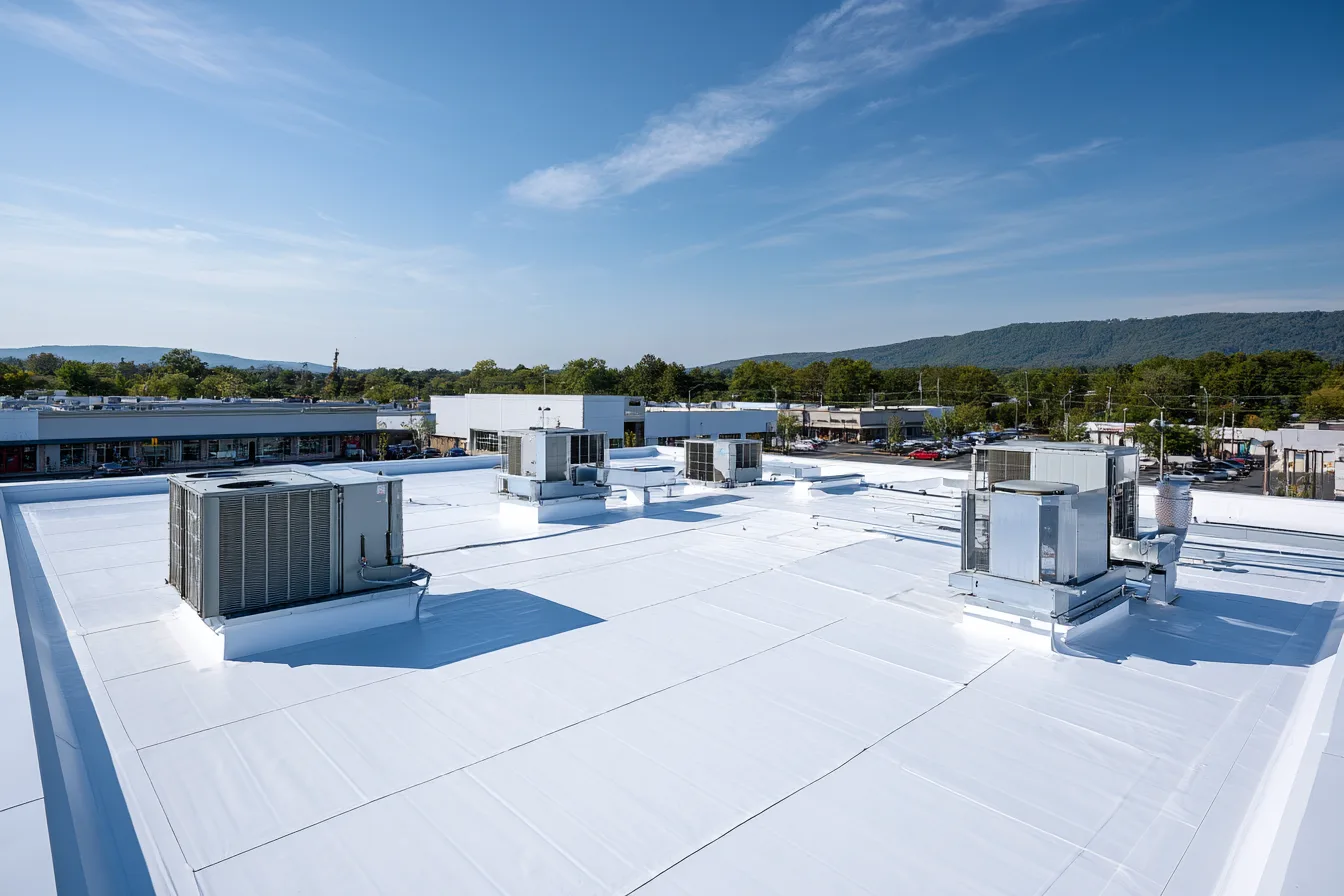
Greenwood commercial roof work starts with the assembly
A low-slope roof is an assembly: its waterproofing surface sits above other layers and a structural deck. An opening at a seam or rooftop-unit curb can let water travel into those layers before a leak appears inside. Patching the visible opening and retaining wet material below are different decisions.
For a Greenwood building, a useful inspection considers seams, penetrations, edge details, drainage and signs that moisture has moved beneath the surface. The existing system and the condition of those layers set the options. Building use then shapes how the work can be carried out.
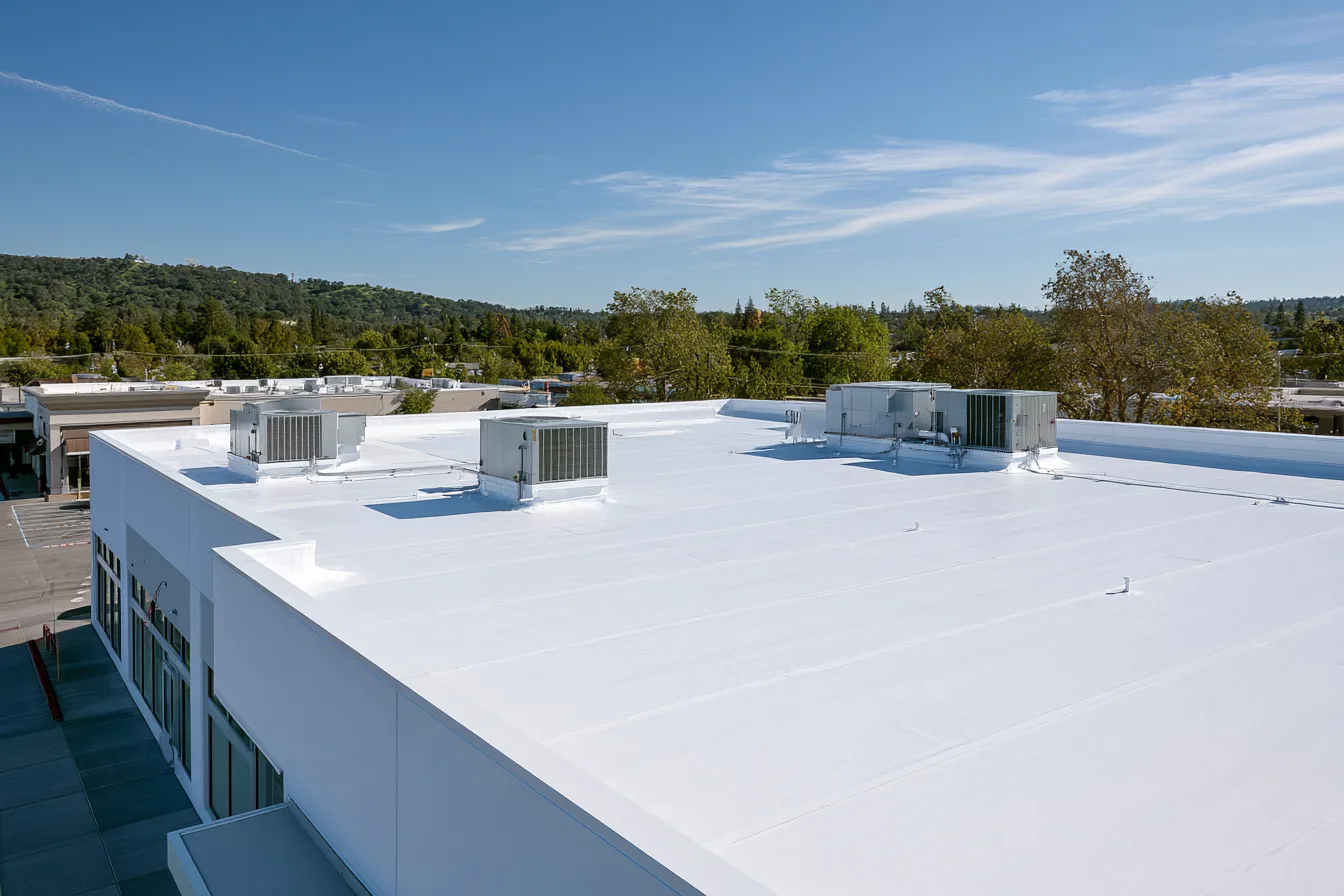
What a Greenwood low-slope commercial roof is made of
Knowing the layers makes every later conversation easier, because repair, coating and replacement are really decisions about which of these layers can stay.
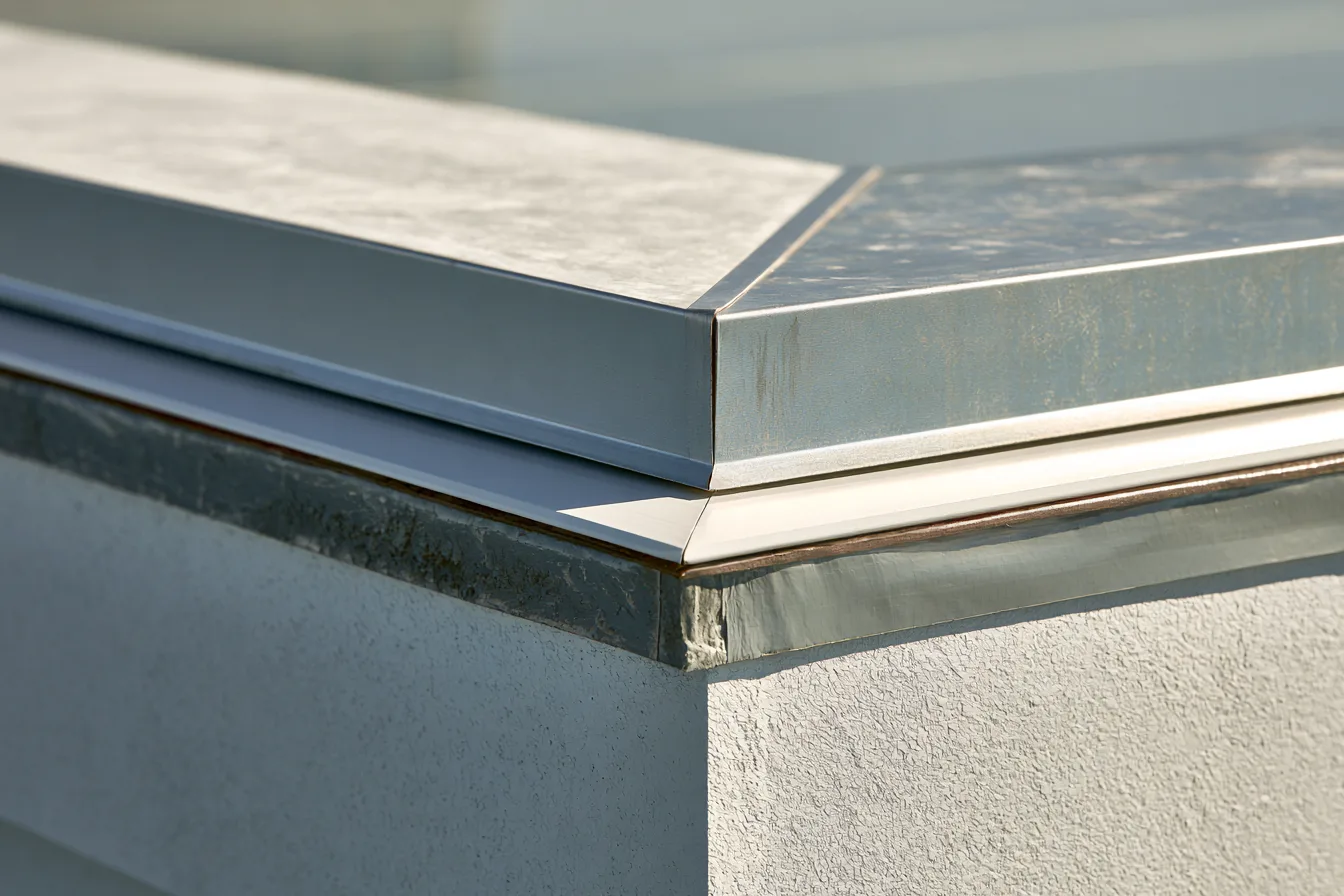
Membrane or surface
The waterproofing layer: TPO, another single-ply sheet, modified bitumen or a built-up roof, sometimes with a coating over it. It is continuous across the field and turns up at every wall, curb and pipe. Those turn-ups are where an inspection spends its time.
Cover board
Many roofs have a thin, dense board directly under the membrane. It gives the membrane a firm surface, spreads the load of foot traffic and keeps the softer insulation below from being crushed around rooftop units.
Insulation
Rigid insulation boards provide the thermal layer and, when tapered, the slope that moves water to the drains. Insulation that gets wet loses its value, holds water against the deck and stays wet. How much of it is wet is the question that decides whether a roof can be kept or has to come off.
Structural deck
Steel, wood or concrete carries everything above it. Long-running leaks rust steel decking and rot wood. Deck problems are found from below, from soft spots underfoot or when a section is opened, and they have to be corrected before anything new goes over them.
Repair, coating or replacement for a Greenwood building
- Targeted commercial repair
A localized opening can be repaired when the membrane and surrounding substrate are suitable. The repair must be compatible with the existing system; an unidentified roof coating can complicate adhesion.
- Coating or restoration
A coating is a system applied over a suitable prepared roof. It does not make wet insulation dry or repair a weak deck. Moisture condition, adhesion, drainage and the coating manufacturer’s requirements determine whether retention is sensible.
- Roof replacement
Replacement removes material that can no longer serve as a reliable base and creates an opportunity to address underlying conditions. The proposal needs to describe retained layers, removal, insulation, drainage and tie-ins, not only a membrane name.
Plan Greenwood roof work around the building
- Occupied space and access
Roof access, material movement and work zones need to account for entrances, loading areas and the people using the building. The work plan should make those boundaries clear.
- Rooftop units and other trades
A curb is the raised frame beneath rooftop equipment. Its height and flashing affect the roofing transition. Mechanical or electrical work around units needs coordination with the roofing scope.
- Drainage and existing elevations
Water needs an unobstructed route to the intended drains, scuppers or roof edge. A new surface alone will not correct a low area or blocked outlet. Drainage changes belong in the system discussion.
- What the price includes
Removal, wet-material replacement, insulation, perimeter details, penetrations and protection of occupied areas can change project cost. Compare those inclusions before comparing totals.
What stays unknown until a commercial roof is opened
From the surface, a roofer can see seams, flashings, ponding and past repairs. What cannot be seen is how far water has travelled inside the roof. When that answer matters to the decision, a few small core cuts, patched as they are made, show how many roof layers are present, what they are and whether the insulation is wet.
That matters because building codes generally limit how many roof systems can be stacked, and because wet insulation has to come out whatever goes on top. A recover or coating price put together without checking below the surface is carrying a guess.
On larger projects the unknowns are handled with unit prices: a stated cost per square foot to replace wet insulation or damaged deck, applied to what is actually found. That keeps the base price meaningful and the additions measurable.
Flat roofing, TPO and coatings solve different problems
Each of these has its own page because each starts from a different question about the building.
Flat roof repair and drainage
Start here when the building has an active leak, ponding water or a drain that backs up. Low slope describes the roof’s shape, not its covering. The page follows water from the field of the roof to the outlets and explains when a detail repair is enough.
TPO roofing
For buildings with a white single-ply membrane, or owners considering one. Seams, attachment and flashing are what make a TPO roof work, and repair materials must be compatible with the existing system.
Roof coatings
For a roof that is worn but still dry and well attached. A coating can extend its life with less cost and disruption than replacement, provided the preparation is done and the roof underneath deserves to be kept.
Commercial roofing FAQs
Can a leaking Greenwood commercial roof be coated?
Sometimes, after the cause of the leaks is repaired and the roof is found suitable for that coating system. Wet insulation, unsound decking or poor adhesion are reasons to reconsider the scope. A coating is not a shortcut around those findings.
Does a flat roof need to be completely level?
No. Low-slope roofs need a path for water to reach their outlets. Drainage depends on the deck, insulation layout and outlet details; ponding should be investigated rather than accepted as a benefit of a “flat” roof.
Can roof work happen while a business stays open?
That depends on the scope and building use. Discuss access, noise, dust, odors and material movement with the people responsible for the building. Entrances, occupied areas and sensitive equipment help determine where protection is needed and how the work should be sequenced.
What information helps start the commercial request?
The property location, roof type if known, the affected interior area and whether water is entering now are a useful start. An unknown membrane type is fine. Existing roof records can help if they are available, but they are not required to ask for help.
Talk through the commercial roof
Tell us about the building, the leak or the project you are planning. Request a free roof inspection to begin the system and scope conversation.
Call (479) 252-9404