TPO roofing in Greenwood, AR
Plan TPO roof repair or replacement for your Greenwood building. Look at membrane condition, seams and the layers beneath before choosing the scope.
Free roof inspection. Start with the roof’s condition.
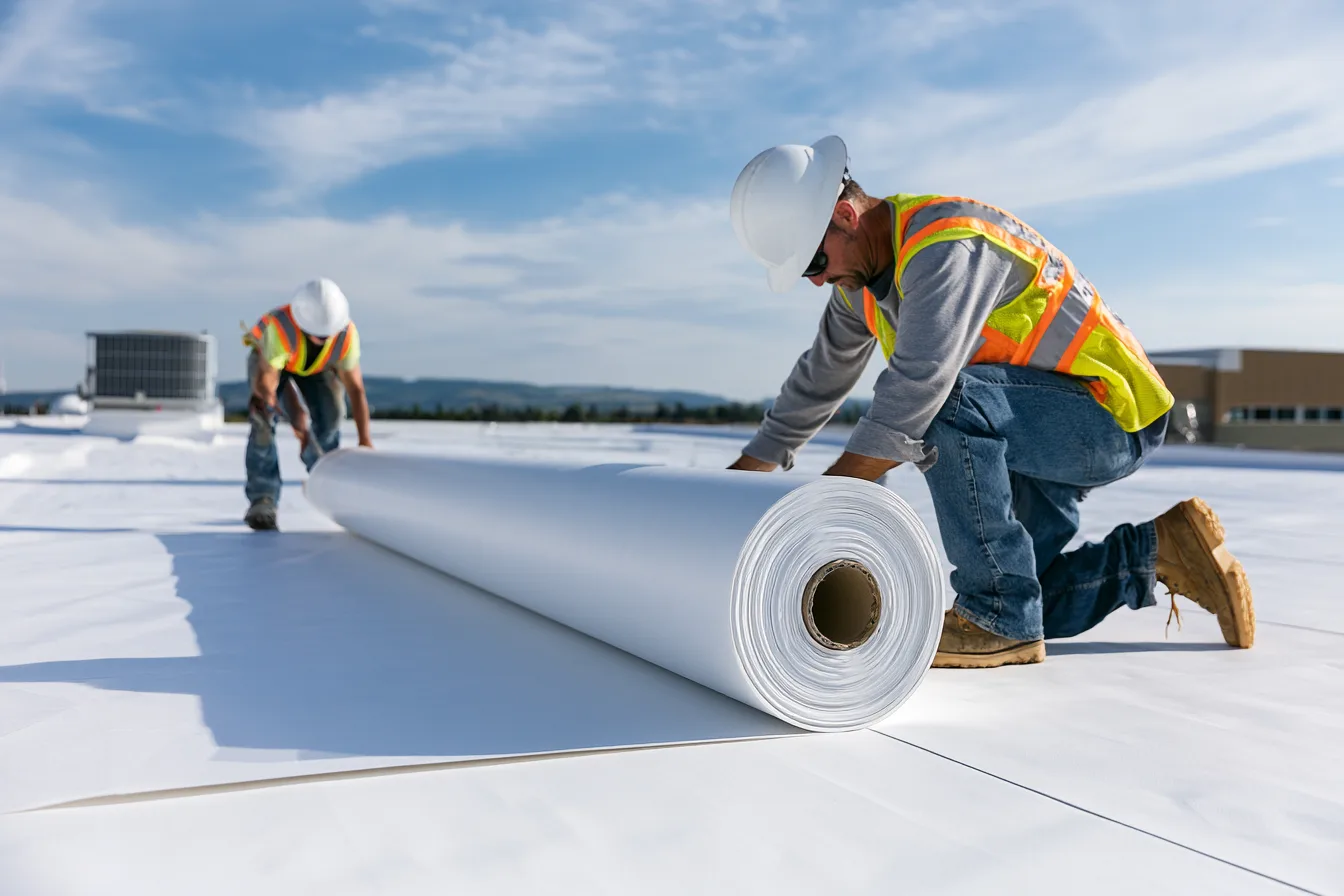
TPO roof repair for Greenwood buildings
TPO is a thermoplastic roofing membrane whose seams are joined with heat. That connection is central to the roof’s performance, along with attachment, perimeter details and flashings around units and pipes. The broad white surface is only one part of the assembly.
Before repairing an existing roof, identify the membrane and what has been applied to it. Records, labels and inspection can help distinguish TPO from other materials and reveal older patches or coatings. The repair needs a suitable surface and a compatible method, not simply a material of the same color.
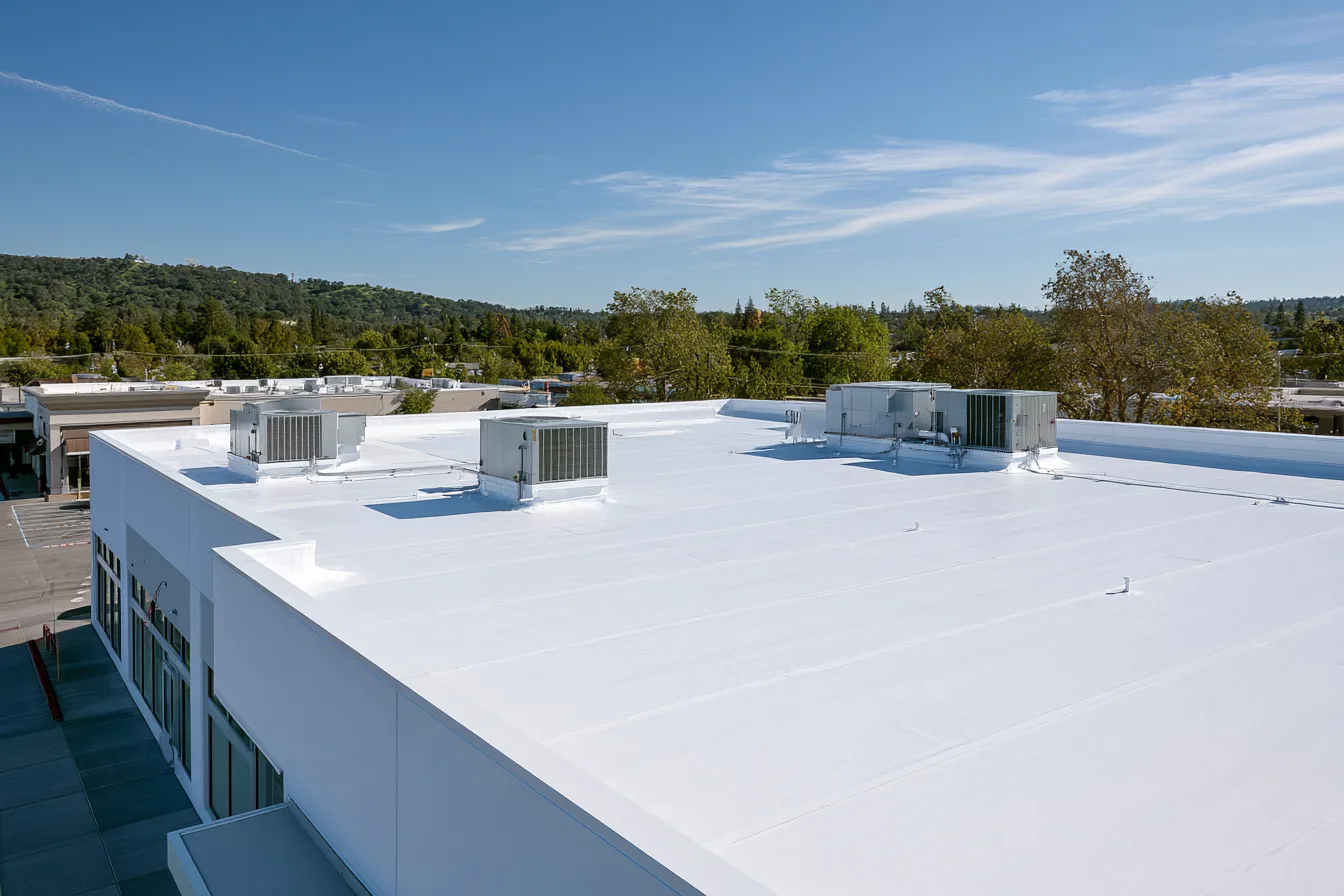
Seams, penetrations and roof edges
- Seam condition
Openings, contamination or damage at a seam need a system-appropriate repair. For new welding, manufacturer procedures such as test welds and seam checks help verify that the connection has formed correctly.
- Curbs and pipes
Equipment curbs and pipe penetrations require formed flashings and secure terminations. Their condition and height relative to the finished roof affect how the new work ties in.
- Perimeter and attachment
Edges and roof attachment are part of the assembly design. A membrane selection alone does not specify how the roof is held down or how movement is accommodated.
How a TPO roof repair is made
A TPO patch is welded, not glued, and a weld only works on clean membrane of the same kind.
Confirm the membrane
White single-ply can be TPO or PVC, and the two will not weld to each other. Roof records, markings on the sheet or a small sample settle it before any material is ordered.
Clean back to weldable membrane
TPO weathers and picks up dirt, and a patch will not fuse to that surface. The repair area is scrubbed and cleaned until fresh membrane is exposed. Very old TPO sometimes will not weld reliably at all, which is a finding in itself.
Weld the patch
A patch of new membrane with rounded corners is cut to extend past the damage on all sides and welded with hot air. Heat, speed and pressure have to suit the day’s conditions, which is why a test weld comes first.
Probe every seam
Once it cools, the whole edge of the weld is checked with a probe for any spot that did not fuse. The same probe run along nearby seams can find the next leak before it starts.
Repair, recover or replace a TPO roof
- Repair an isolated opening
A contained defect can be addressed when the nearby membrane and substrate remain suitable. Determine whether water has affected insulation or other layers below the opening.
- Recover an eligible existing assembly
Retaining an existing roof needs a sound, suitable base and an acceptable assembly. Existing layers, moisture, attachment and applicable requirements affect that decision.
- Remove and replace unsuitable material
Wet or deteriorated layers cannot be made sound by hiding them under new membrane. Replacement scope should explain what comes off, what stays and how the new system connects at every edge.
What drives the cost of a TPO roof in Greenwood
A TPO price is mostly a description of everything that is not the membrane. These are the parts that move it.
- Tear-off or recover. Removing the old roof adds labor and disposal. It is required when the insulation is wet or the limit on roof layers has been reached.
- Insulation. The thickness needed for the building, tapered areas for drainage and a cover board all add material.
- Attachment. Mechanically fastened and adhered systems differ in labor and in how they handle wind.
- Penetrations and curbs. Every unit, pipe and drain is hand work. A roof crowded with equipment costs more per square foot than an open one.
- Membrane thickness. A thicker sheet costs more and puts more wearing surface over the reinforcement.
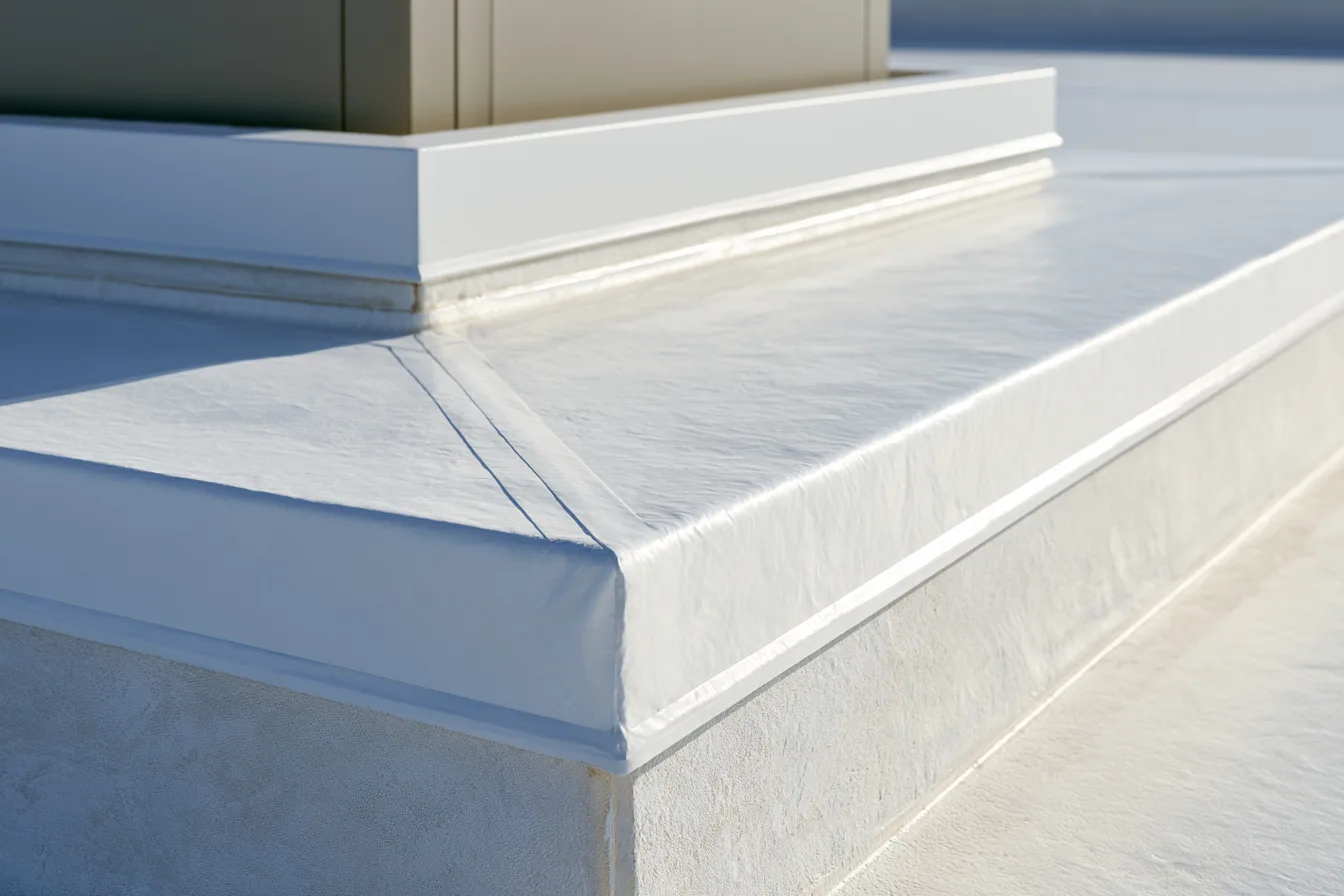
Compare TPO roofing proposals for your building
Ask for the exact membrane, attachment method, insulation and detail scope. Thickness is one specification, but it does not describe the deck condition, drainage, seam quality or rooftop transitions. Clarify whether moisture investigation, wet-material removal and equipment-related work are included.
For an occupied Greenwood building, discuss entrances, material staging and the interior spaces beneath the work. Coordinate rooftop mechanical work with the roofing sequence so a later trade does not undo a newly completed connection.
TPO roofing FAQs
Can you identify TPO just because the roof is white?
No. Other membranes and coatings can be white. Roof records and inspection help identify the material so repairs use a compatible system.
Is thicker TPO always the best choice?
Thickness is one part of the specification. Compare the whole assembly, building use, attachment, details and manufacturer requirements. A thicker sheet cannot correct poor drainage or an unsuitable base.
Can an older TPO roof be coated?
Potentially, if the existing roof and the proposed coating are suitable together. Preparation, adhesion and moisture condition need to be checked. See roof coatings for the conditions that change the decision.
What if the building’s roof records are missing?
Start with what you know: property location, approximate age, leaks and previous work. Inspection can help establish the existing material and the questions that need further investigation.
Discuss your Greenwood TPO roof
Share the building location and the TPO roof concern, even if the system details are not yet known.
Call (479) 252-9404