What standing water can tell a building owner
Water remaining on a low-slope roof is a reason to understand the drainage path. The cause may be at an outlet, in the roof’s shape or around a detail that interrupts the flow.
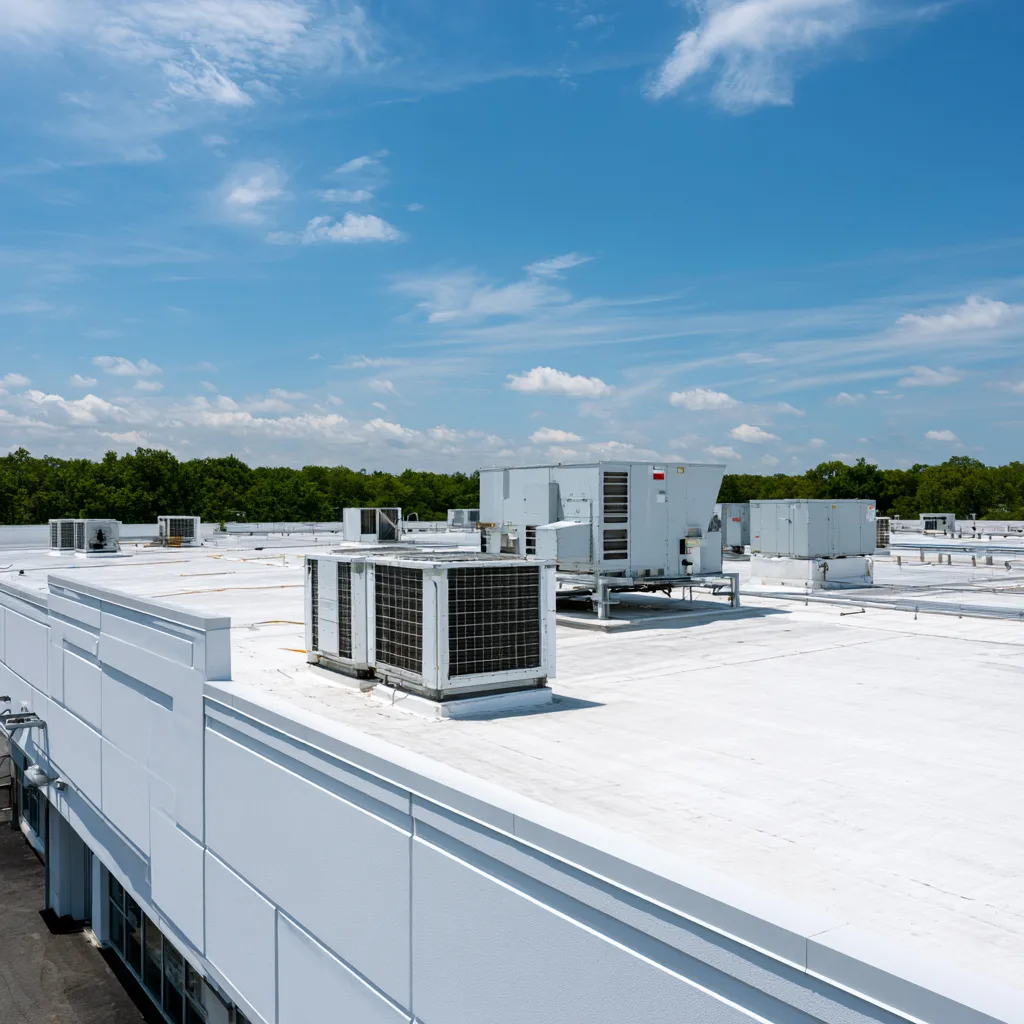
Follow the route to the outlet
A low-slope roof is not intended to behave like a storage basin. The deck, insulation and outlets work together to move rain off the surface. When water remains in one area, look at that whole route before choosing another surface treatment.
Debris can obstruct a drain. An outlet may sit above a nearby low point. Equipment curbs and earlier patches can also change how water moves. These are different causes, and they may need different work.
For a Greenwood building with a leak or a drainage concern, commercial roofing help starts with the roof assembly and the occupied space beneath it. Greenwood Roof Pros offers a free inspection to begin that conversation.
Keep the drainage details visible
The area around a drain or scupper needs attention as well as the opening itself. Roofing must connect soundly to the outlet, and the water path leading to it must remain usable. A drain can be open while a low area nearby still holds water.
Building maintenance and mechanical work should preserve those paths. Materials left on the roof or a new detail placed across a drainage route can introduce a problem that was not part of the original roof layout. Keep access and work by other trades in the discussion.
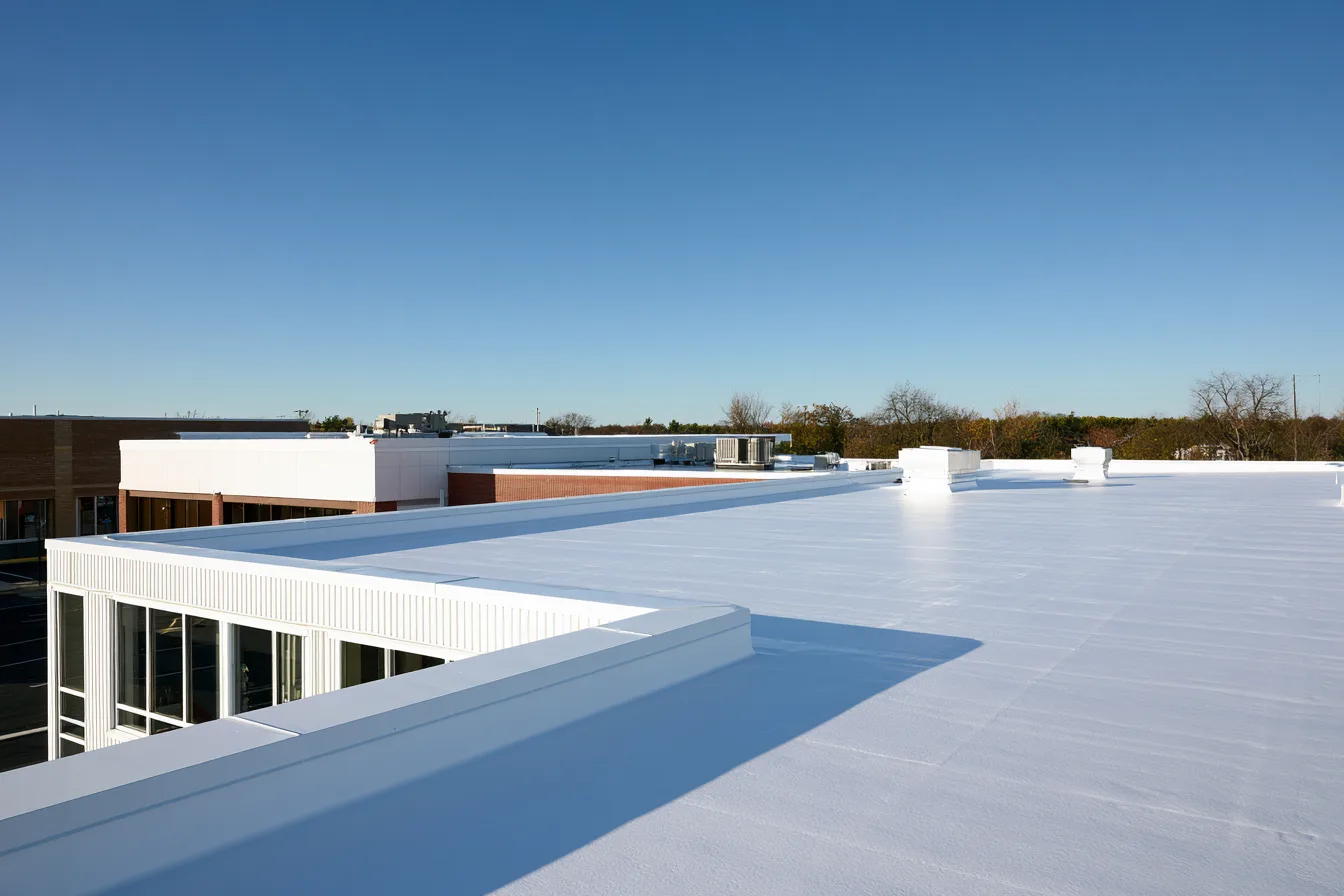
A new roof surface may keep the same low spot
A new membrane follows the base it is installed over. If the base keeps the same low area, replacing the surface alone may preserve the same drainage problem. The proposed work may need to address insulation layout, deck condition or outlet elevations as well.
A coating also follows the existing contour. Even where a coating product is suitable for ponding exposure, its suitability does not identify the reason water remains or resolve a structural concern. Separate the material choice from the drainage correction.
Useful questions for a drainage proposal
- What causes the water to remain?
Ask whether the finding points to an obstruction, an outlet connection, roof geometry or more than one factor. The proposed work should connect to that cause.
- Which layers or details change?
Clarify removal, insulation, outlet and flashing work. A drawing or scope description can make the intended water route easier to discuss.
- Who coordinates connected work?
Drains, pipes, equipment and roof structure may involve more than roofing alone. Identify responsibilities and sequence before the work is priced as complete.
- How will the completed work be checked?
Agree how the repaired detail and intended drainage path will be reviewed. Retain the project information so future building work can respect it.
Commercial roof drainage FAQs
Is there one number of hours that makes all standing water acceptable?
No single duration can establish suitability for every assembly or structural condition. The roof system, manufacturer requirements, drainage design and cause need to be considered together.
Can I diagnose a low spot from an interior stain?
No. Water can travel within the assembly, and an indoor stain may not sit beneath the entry point. Describe both observations for the roof inspection.
What service should I look at first?
The flat roofing page explains drainage details and how targeted repair differs from renewing the assembly.
Discuss the roof above your building
Tell Greenwood Roof Pros where water remains or where the building leaks. A free inspection can start the roof and drainage discussion.
Call (479) 252-9404